
From the roar of the tiger in Life of Pi to the ultra-realistic expressions of Caesar in Planet of the Apes, digitally created animals have become stars of film and advertising. Thanks to visual effects (VFX) and CGI, it is now possible to bring extinct creatures such as dinosaurs to life, safely approach wild species, or create fantastical animals that exist only in our imagination. But behind this visual magic lie considerable technical and artistic challenges.
But why recreate digital animals, and what are the technical challenges involved in their creation? That's what we'll be looking at in this article!
Why create animals digitally?
The primary reason is mainly ethical. While using animals on film sets can make the final product appear more natural, it can also put the animals under intense stress, put them in danger, or even expose them to the risk of abuse. This is why the audiovisual industry (films, television series, advertising, etc.) is increasingly seeking to limit the use of real animals on film sets.
The second reason is creativity. CGI makes it possible to bring back species that have been extinct for thousands of years, such as the dinosaurs in Jurassic Park, to invent hybrid or imaginary creatures, as in Fantastic Beasts, or to magnify real animals and integrate them into fabulous and extraordinary worlds.
Finally, creating animals digitally is also a practical choice. This is because every movement of a digital animal can be controlled down to the millimetre, every glance and reaction. This gives filmmakers complete freedom.
Of course, reproducing an animal in 3D is no easy task, as any CG artist will tell you. But what are the technical challenges involved? Let's take a look.
The technical challenges of creating an animal in CGI
As with anything, you have to understand how it works, because recreating an animal in CGI is one of the most complex exercises for a studio. So you have to start by studying the animal's anatomy: understanding its bone structure, musculature, and natural body movements.
Once this stage is complete, the second challenge concerns the visual rendering itself. That is to say, reproducing realistic fur, the shimmer of feathers, or the reflections of wet skin, all of which requires powerful software and hours of computation. Specialized teams sometimes spend weeks working solely on simulating hair or feathers.
As mentioned above, another challenge that CG artists face is what could be described as an emotional challenge. A digital animal is not just a collection of polygons: it must breathe, interact, and elicit a response from the viewer. Giving a creature a “soul,” even if it is silent, makes all the difference between a simple 3D model and an unforgettable character.
Perhaps you already have some examples in mind, we do too! Let's discover them together!
Notable examples in the industry
Hollywood has provided several essential references:
- The tiger Richard Parker in Life of Pi: a model of realism.
- The Jungle Book and The Lion King (live-action versions): a total immersion where all the animals are digital.
- Planet of the Apes: a technological revolution that combines performance capture and CGI to create lifelike primates.
But CGI is not only used to reproduce reality. It is also a powerful tool for bringing imagination to life:
- The hippogriff Buck in Harry Potter and the Prisoner of Azkaban: an iconic example where CGI combines animal realism (wings, feathers, movements) and imagination to make a mythological creature believable and create a memorable scene of interaction with Harry.
- The creatures of Fantastic Beasts: the saga illustrates how CGI makes it possible to multiply hybrid and magical species, each with its own personality.
- Game of Thrones / House of the Dragon : les dragons, véritables personnages à part entière, prouvent que la CGI peut transmettre autant d’émotion qu’un acteur humain.
Beyond cinema, documentaries and advertisements also use this technology to tell the story of the relationship between humans and animals in a different way.
What is our opinion, our view of these digital animals? Do we have any concrete examples? That is what we are going to look at.
The view of Tronatic Studio
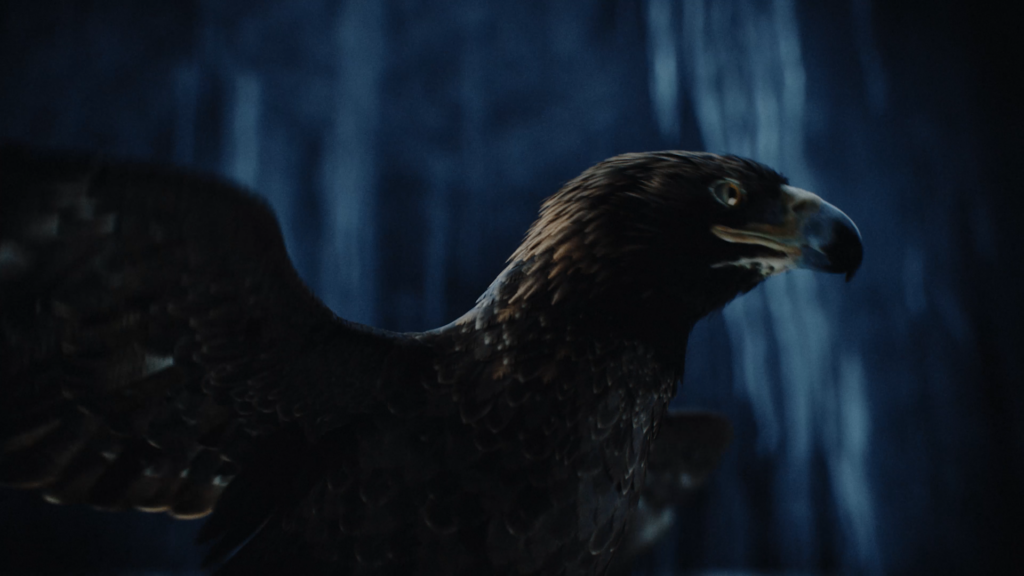
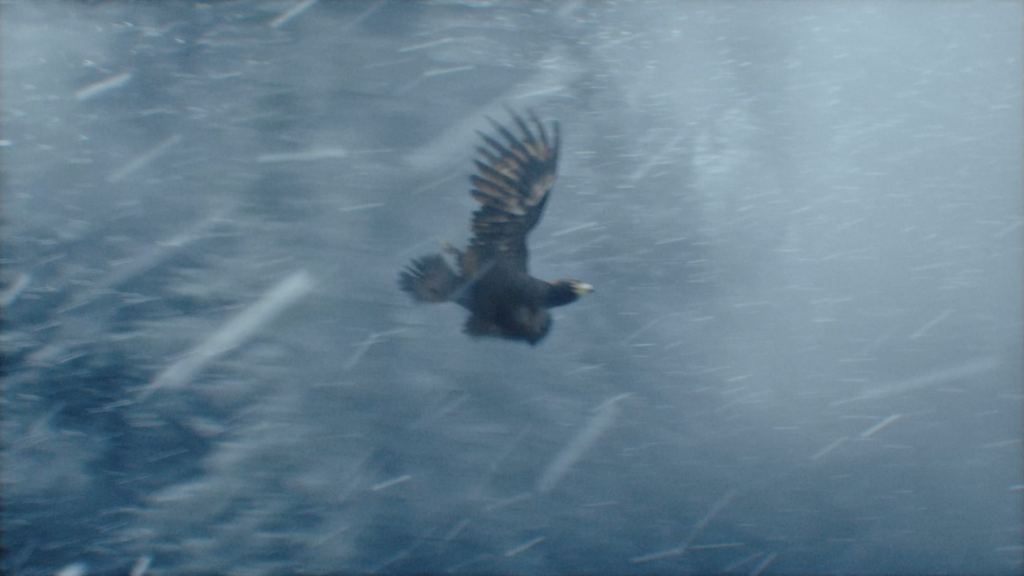
At Tronatic Studio, we have had the opportunity to take on this challenge through various projects. In Inoxtag's documentary Kaizen, we created a digital eagle capable of interacting and integrating credibly into an icy environment.
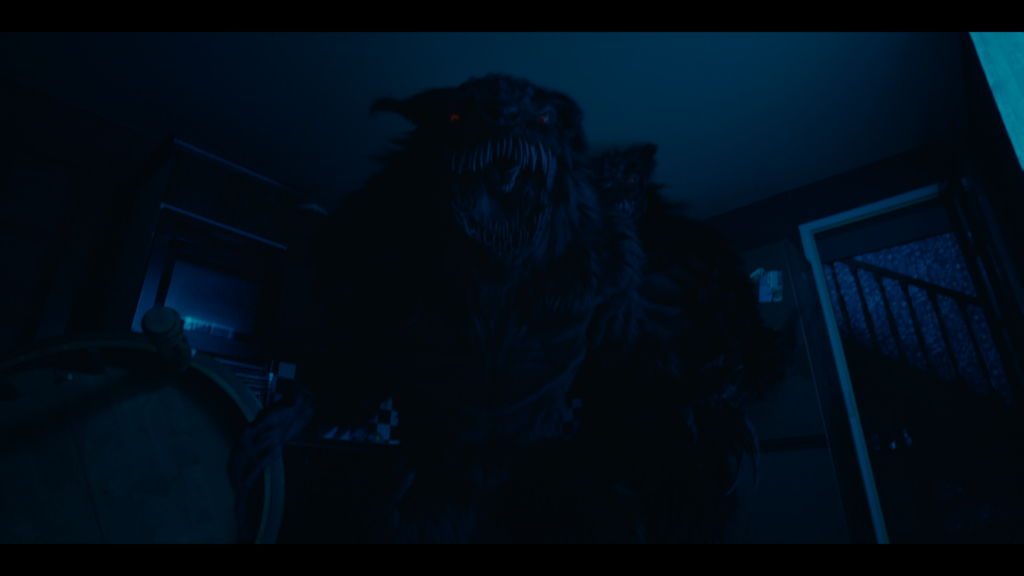
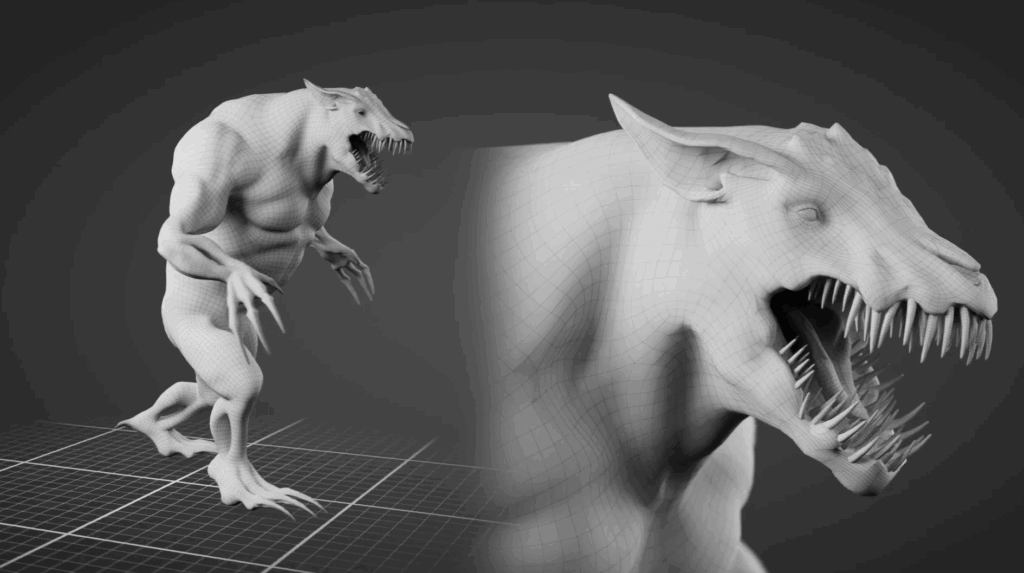
For Anaïs Vachez's short film "ADA", we designed two monsters from scratch that interact with the main character while blending perfectly into the environment.
More recently, for the Fuso project, we animated an elephant: a majestic and symbolic creature, whose digital presence had to be both realistic and emotionally evocative.
Or the sequence in the middle of the Atlantic Ocean with the swordfish and other fish in Inoxtag's video "10 days to cross the Atlantic Ocean! (ft. Guirec Soudée)".
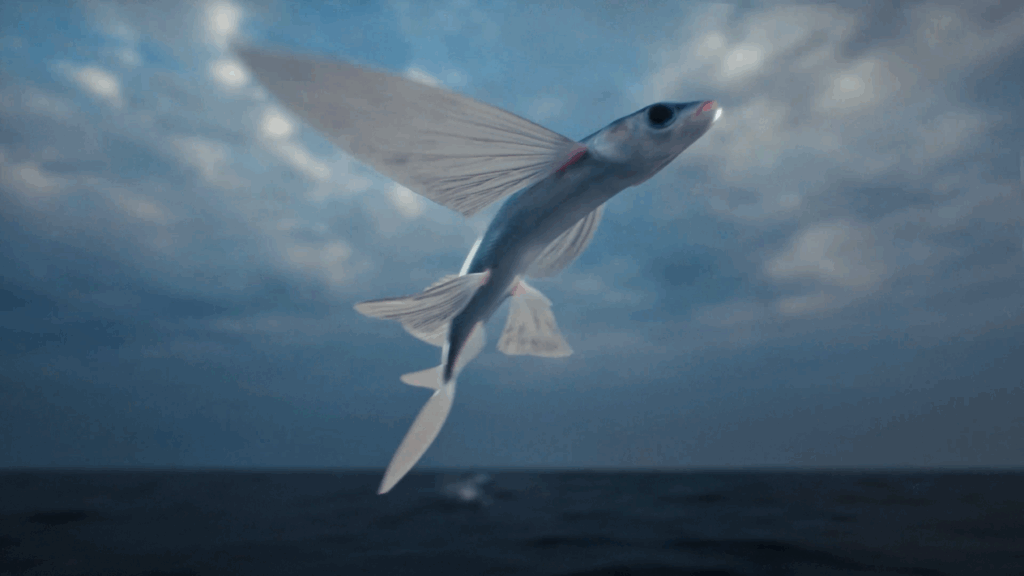
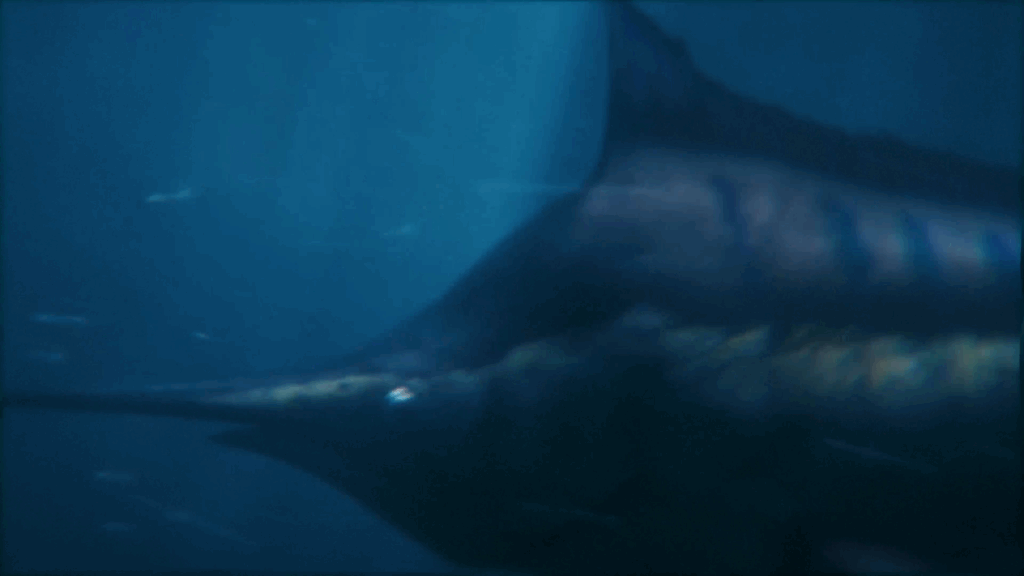
These experiences remind us how much digital animals are a demanding but exciting playground, where technology and art come together to tell stories.
Digital animals are not just a technological feat: they are part of a new way of representing living beings, combining respect, creativity and innovation. Tomorrow, these creatures could find their place in cinema, but also in museums, video games and immersive events.
At Tronatic Studio, we continue to explore these possibilities and push the boundaries of CGI to bring tomorrow's animals to life – whether real or imaginary.